 IUX
IUX
 Exness
 Vantage
 XM
XM
 ICMarkets
 LiteFinance
 Moneta
 Tickmill
 South Africa (9)
 India (9)
 Bangladesh (12)
 Germany (9)
 Thailand (10)
 Philippines (9)
 Nigeria (10)
 Vietnam (10)
 Malaysia (9)





Understanding Margin Calls and Margin Call Levels



Share:
Share:
Education
9 min read
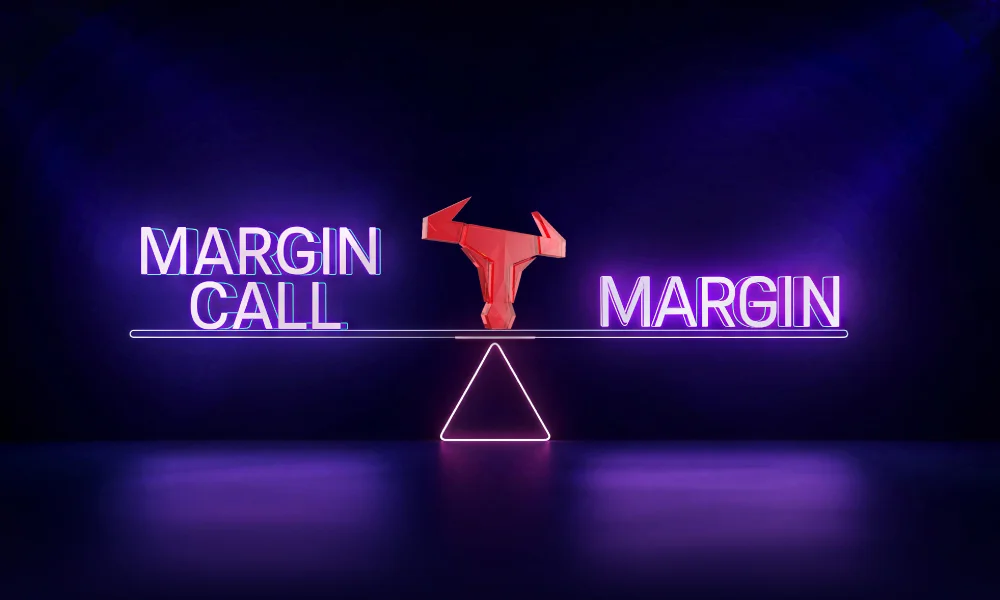
Margin trading is a game-changer, especially because it gives traders more buying power and allows them to trade with borrowed funds.
But of course, with r get wta power comes great responsibility. If a trader is not careful, they could get a margin call.
A margin call is probably many trader’s worst nightmare.
One moment they’re riding the wave of profits and the next, their broker is requesting they restore their margin.
So, how do margin calls work? What are margin cal levels?
And most importantly, how can traders avoid getting margin calls in the first place?
Don’t worry if it still feels confusing...
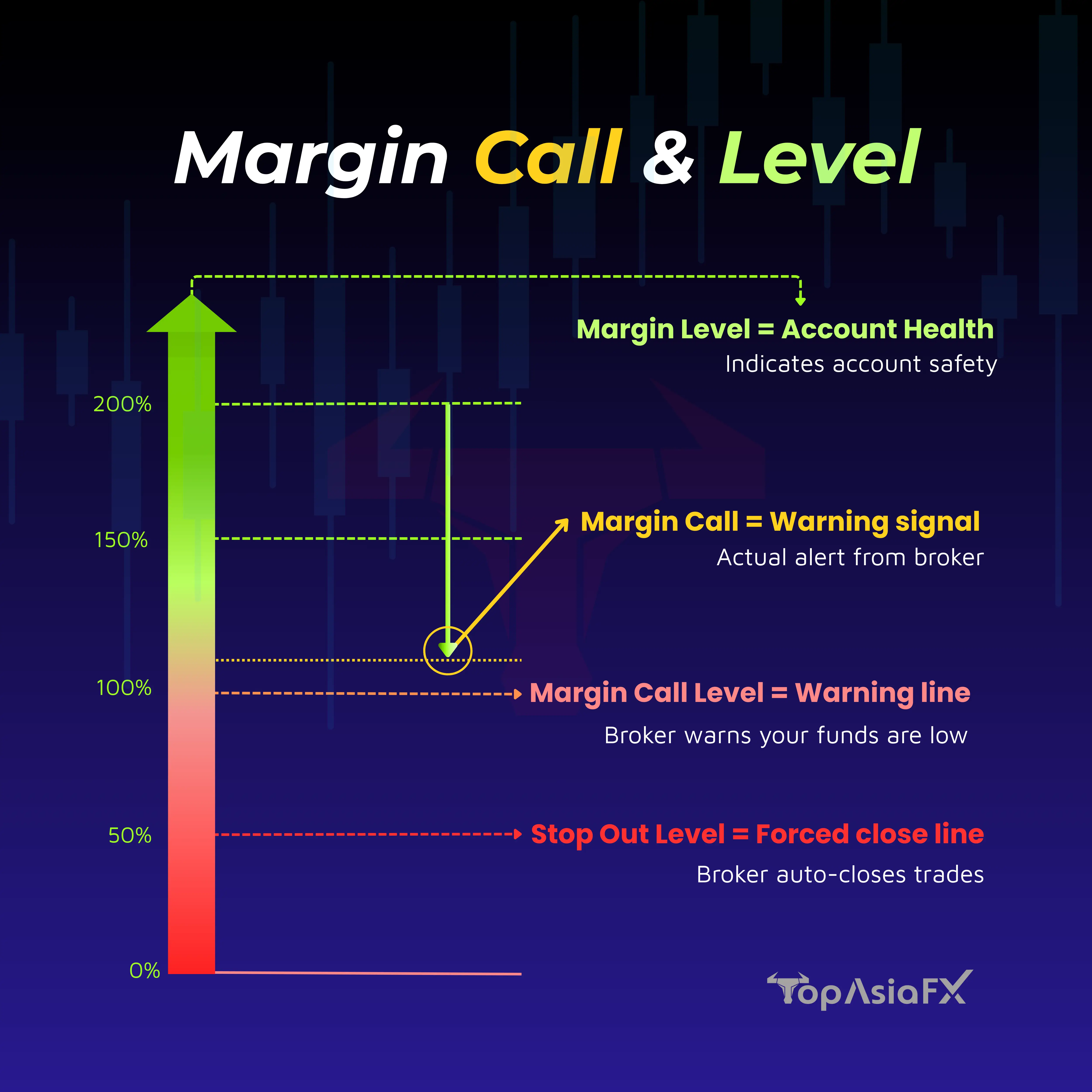
Let’s simplify this with a quick breakdown that shows what a margin call and margin level mean in forex trading.
What is a Margin Call?
A margin call is a warning that happens when the value of a trader’s margin account falls below their broker’s required minimum level.
A margin call essentially says, “Your account is too low on available funds. Fix this.”
How Does a Margin Call Work Within a Margin Account?
When a trader is using a margin account, it means that they’re borrowing money from a broker to to buy more assists than their original balance can afford.
These assets are considered collateral for the loan.
If their value drops too much, the broker will demand that the trader add more funds to their account — margin call.
This way, the account balance stays above the margin requirement.
If the trader refuses to add more funds to their account per the margin call, the broker may sell off their holdings. This is done without warning sometimes.
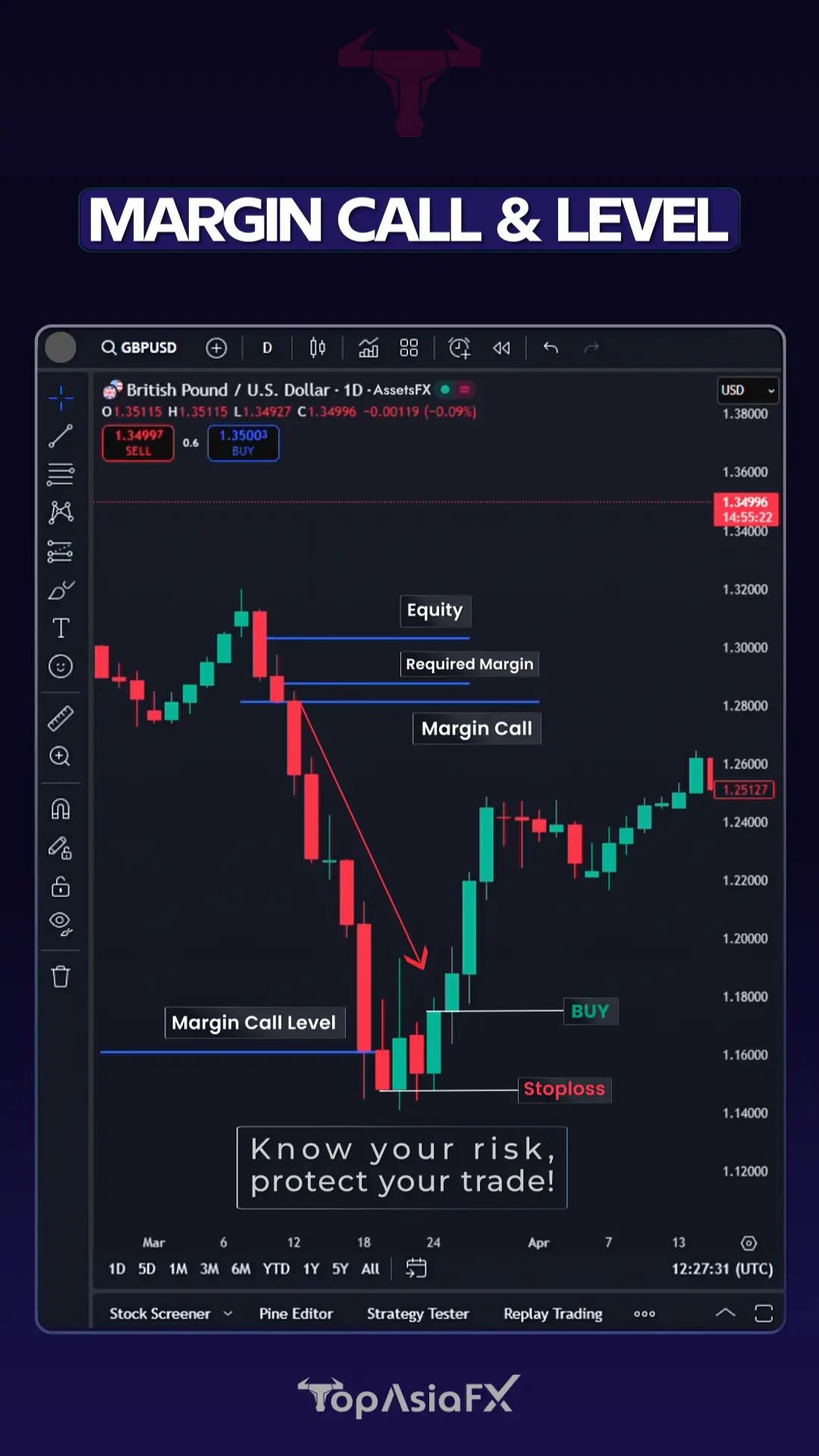
To make this easier to understand, check out the chart below that maps out equity, margin, and stoploss:
What is a Margin Call Level?
A margin call level is the point at which a broker sends a margin call to the trader.
This level is initially set by the broker and is available to the trader beforehand.
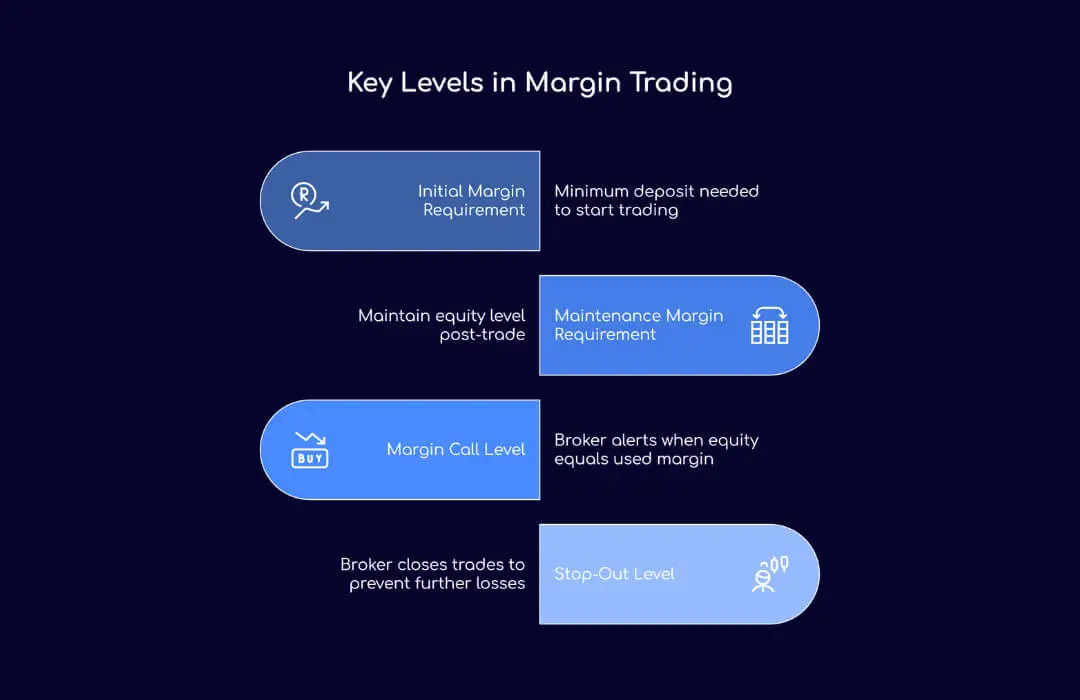
That said, take a look a the components that work hand in hand with a margin call level.
Key Levels in Margin Trading
Margin call levels vary across brokers.
Broker A could set their margin call level at 80% and broker B, at 100%. Regardless, both serve the same purpose.
Here are the key levels every trader should be aware of:
Initial Margin Requirement
The initial margin requirement is the minimum amount any trader needs to deposit before they can trade on margin.
In the United States, the FINRA and the Federal Reserve Board mandate traders to deposit at least 50% of the purchase price when they want to buy stocks on margin.
For instance, if a trader wants to buy $10,000 worth of stock on margin, they must have at least a $5000 deposit in their forex account.
Maintenance Margin Requirement
This is the equity traders must always maintain.
If it falls below, they risk a margin call.
Understanding the link between equity, used margin, and floating P/L is essential.
Margin Call Level
This is when a trader’s equity equals their used margin. At this stage, brokers prevent opening new positions.
More details: margin call and stop-out among brokers.
Stop-Out Level
This is the final level things can get to.
I like to call this the danger zone. You don’t want to be in it. Try not to.
The stop-out level is the point where a broker will begin to automatically close a trader’s trades, typically to prevent any more losses.
The stop-out level is predefined by the broker.
Although this level varies widely depending on the broker, it is common to find stop-out level at 50%.
Keep in mind though that not all brokers use stop-out levels. So traders working with such brokers are exposed to high risk.
These traders are completely responsible for managing risk in their trades.
Yikes!
The interaction between the following factors determines the stop out level:
Leverage Ratio
The leverage ratio allows traders to control larger positions with a smaller amount of capital. This can go two ways.
A higher leverage ratio increases the potential profit but increases risk because it reduces the margin level.
However, a lower leverage ratio implies that traders will need more capital to open positions, which will reduce their chances of reaching the stop out level quickly.
(Learn more about lots & leverage)
Margin Requirement
The margin requirement in forex trading describes the amount of capital a trader needs to deposit to open and sustain a position.
Higher margin requirements (often due to low leverage ratio) make it harder for traders to maintain positions during market fluctuations.
On the flip side, lower margin requirements (likely due to high leverage ratio) allow traders to control larger positions, while increasing their risk of reaching the stop out level faster.
Account Capital
Also known as equity, account capital refers to the total value of a trader’s account, and this includes unrealized profits and losses.
If the equity level of a trader’s account drops due to losses, the margin level reduces as well.
Subsequently, if the margin level drops below the stop out level set by the broker, open positions will be closed out.
Consider this quick rundown of how these factors work together.
Let’s say a trader uses low account capital and high leverage ratio, they are at risk because the smallest price changes against their investments can reduce their account capital and trigger a stop out.
Also, if the margin requirement is high, the trader will need more capital to maintain their open positions.
This means they are more likely to hit the stop out level when they experience losses.
Traders must maintain a balance between margin requirement, leverage ratio, and account capital to help them avoid forced liquidation.
Let me take things a step further with a real-life sample.
Imagine this. A trader, Jil, opens a forex trading account with a $1000 capital and uses a 1:1000 leverage ratio.
His broker sets the stop out level to 20%; which means that if Jil’s margin level goes below 20%, his broker will close his open positions.
What do these figures mean for Jil?
Jil may decide to trade 1 lot (100,000 units) of EUR/USD.
The margin requirement for this trade will be 1% because of the 1:1000 leverage ratio.
Jil needs to deposit a $1000 margin, which is 1% of $100,000 in order to open this position.
How is Jil’s Margin level looking with these figures?
Initial account capital: $1,000 (since this is the amount he funded with and there are no profits or losses yet).
Used margin: $1,000 (the amount required to maintain the position).
Margin level, which is calculated as (account capital ÷ used margin) x 100%.
($1,000 ÷ $1,000) x 100% = 100%
Jil’s broker set his stop out level to 20%; so since his margin level of 100% is greater than his stop out level, Jil can still retain his open positions.
But what if the market decides to move against Jil?
If the EUR/USD moves against Jil by 80 pip and each pip is worth $10 per pip since he’s trading 1 lot.
Total loss: 80 pips x $10 = $800
New account capital: $1,000 - $800 = $200
New margin level: ($200 - $1,000) x 100% = 20%
Since Jil’s margin level has now reached 20%, which is the stop out level, his broker will start to close out open positions.
What’s next for Jil’s trading account?
Jil’s broker will close his open trade to avoid more losses.
His remaining balance is $200 after stop out, since the broker will liquidate his trades to keep his margin level above the stop out threshold.
Although Jil’s high leverage ratio (1:1000) allowed him to open a large position, small market movements affected his trade deeply.
Also, a low account capital of $1,000 made it easier for this margin level to drop, leading to the forced liquidation.
In addition, a high margin requirement of 1% meant that he tied up all his account capital in a single trade, which left no room for withstanding market fluctuations.
Because of all of these factors, his broker closed his open trades when his capital dropped to $200, which is the broker’s stop-out level of $20.
If you’ve heard about a stop out level before now, then you must have come across a margin call.
This shows why trading with high leverage can be dangerous — especially for new traders learning with demo accounts.
What Triggers a Margin Call?
Here are the top three reasons traders receive margin calls:
- Losing Value in Open Trades: As currency pairs lose value, equity drops.
- Over-Leveraging: Forex vs Futures trading shows why leverage risks differ.
- Brokers Raising Margin Requirement: Often happens in volatile forex trading sessions.
Real-Life Example: How Margin Calls Work
If Donna funds her margin account with $2000, then her broker offers her a 5:1 leverage. This means that Donna can control up to $10,000 worth of stock.
So, she buys stock worth $10,000. She only uses $2000 of her money and $8000 in borrowed margin.
If the market price rises and her total holdings are worth $11,000, her equity becomes $3000 ($11,000 - $8000).
She’s still safe from a margin call because her equity has not reached $2000.
But if otherwise, her equity dropped to $2000, which means her margin level will be 100%, she will receive a margin call.
Best Ways to Avoid a Margin Call
Even though margin calls are there for trader’s benefit, it can be an inconvenience.
Here are some tips to stay safe while trading on margin:
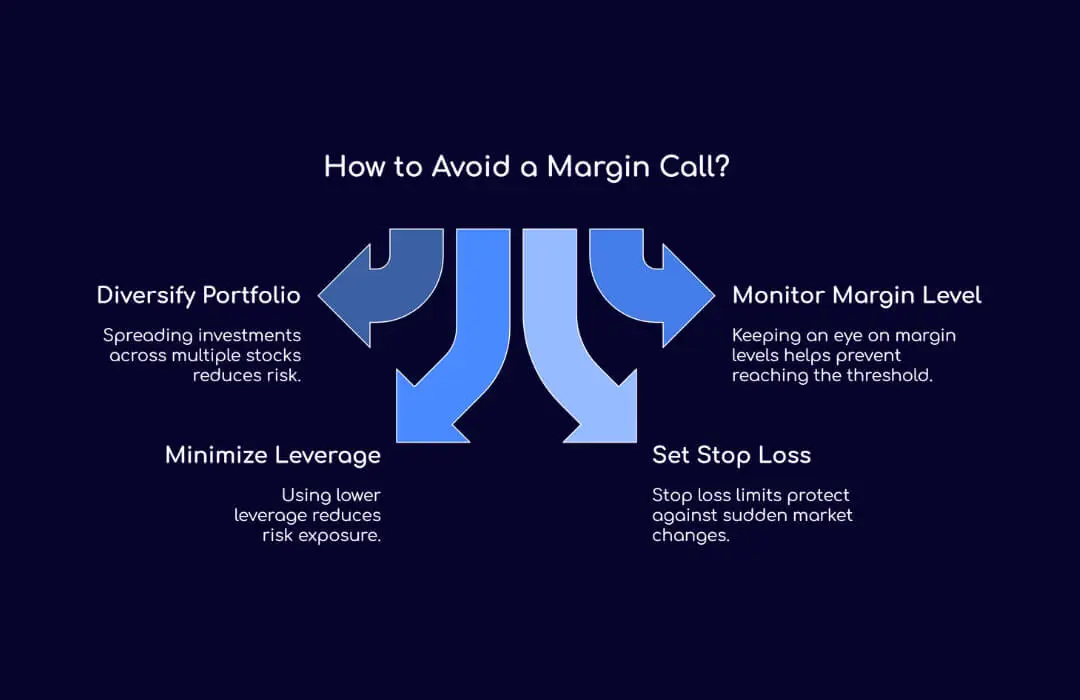
- Diversify: Don’t put all your eggs in one basket.
- Track Margin Level: Monitor your margin level daily.
- Keep Leverage Low: Avoid unnecessary risk.
- Set Stop Loss Orders: Use forex trading order types effectively.
Concluding
Margin trading can boost potential profits, but it also raises risks.
Understanding margin calls, stop-out levels, and proper risk management is the best way to protect your capital.
F. Nathan
Felix Nathan is a professional trader, market analyst, and business development executive with over a decade of experience in the forex and financial markets. Felix specializes in providing actionable market insights, trading strategies, and risk man...